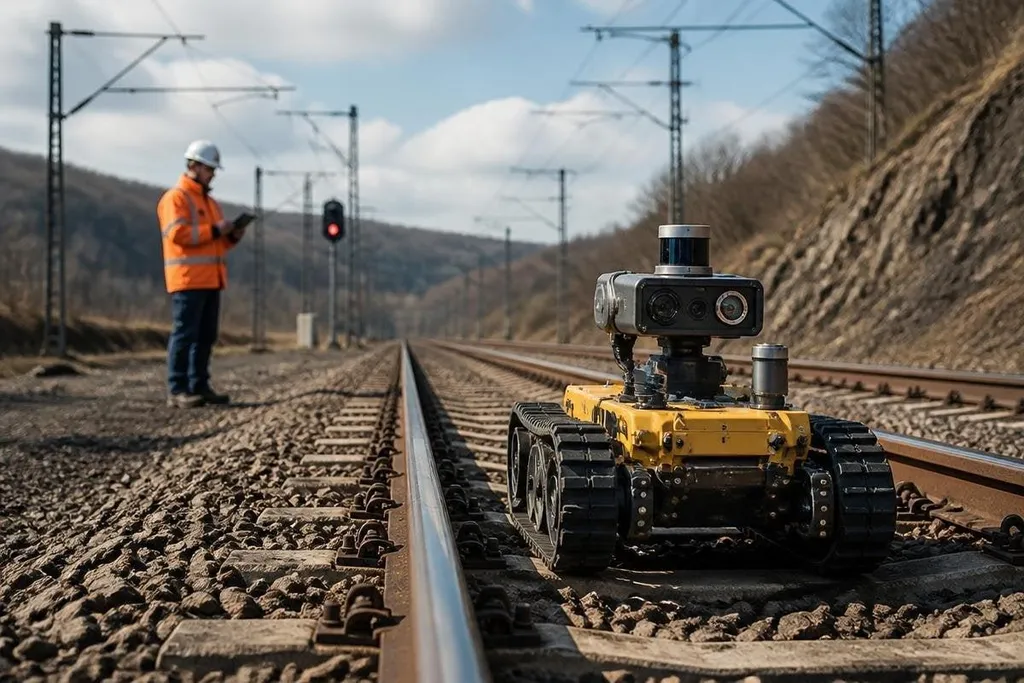
Railway robots may inspect tracks, move tools, or check tunnels without putting a worker in the same place. The hard part is proving that each system can work safely beside trains, weather, signals, and railway schedules.
- Track inspection needs repeatable measurements, not one good video.
- A useful robot must fit railway rules, access plans, and repair work.
- The open questions are cost, fault handling, and who keeps control.
What railway robots have to do
A railway robot can carry cameras, LiDAR, ultrasonic sensors, or tools. LiDAR measures distance with light, while ultrasonic sensors use sound to find nearby objects.
The right payload depends on the job, so a track inspection robot and a tunnel-cleaning robot may need very different designs.
The job must come before the robot. A system that checks fasteners needs a clear view and a way to tag faults by location. Track-moving systems need traction, braking, and a safe way to stop when their route changes.
That link between task and hardware matters because railway work happens in narrow spaces. Machines that work on an open test track may struggle near points, crossings, overhead equipment, ballast, or standing water.
The railway setting changes the test
Railway robots face more than rough ground. They may work at night, near moving trains, under weak light, or during short access windows. Their sensors must keep working when dust, rain, glare, vibration, and metal structures affect the readings.
A good trial should record the conditions around each result. The report should state the track type, weather, speed, distance covered, task time, and number of human interventions. Without those details, a high task score says little about daily railway work.
Safety adds another layer. Operators need to know where the robot is, what it sees, and what happens after a lost signal or failed motor. A remote stop, a local stop, and a clear recovery process matter more than a smooth clip from a controlled test.
Speed is a poor first measure
Railway operators may want faster inspection, but speed can hide missed faults. A robot that covers more track while sending poor images creates another job for the inspection team.
Useful results should answer four direct questions. How many metres did the robot cover? How many faults did it find? How many false alarms did it create? How often did a person need to step in?
The same record should include battery runtime in hours, payload in kg, route length in kilometres, and stopping distance in metres. Those figures let an operator compare a robot with the work already done by people or existing inspection vehicles.
Railway robots work beside switches, signals, and uneven ballast, so a clean lab result leaves key questions open. A report from Robot24.com can place the machine, track setting, route, test date, and measured result beside each claim before the next section looks at where development can slow down.
Where the race can slow down
Railway work has long approval paths. A robot may need changes to operating rules, staff training, maintenance plans, and emergency procedures before it can leave a test site.
Data raises another issue. Inspection images can show track assets, workers, vehicles, and nearby property. The operator needs rules for storage, access, fault review, and deletion before the system sends data into a wider software system.
Maintenance also shapes the cost. Wheels wear, cameras collect dirt, cables loosen, and batteries lose capacity. A purchase plan that counts only the robot misses the people, spare parts, software updates, and track access needed to keep it running.
The strongest opposing view is that early trials need room for rough results. That is fair. A small test can find faults that a full rollout would make expensive, but the test still needs a clear record of what worked and what failed.
A buying checklist for railway teams
Use these checks before approving a larger trial:
- Name the task: write the fault, object, or movement the robot must handle.
- Set the route: record track type, distance, access window, and weather limits.
- Count human input: log every remote command, stop, reset, and manual recovery.
- Measure the result: report detection rate, false alarms, runtime, and coverage.
- Plan the failure: state how the robot stops, returns, gets lifted, or leaves the track.
- Price the service: include staff, training, repairs, batteries, software, and approvals.
Those checks turn a robot trial into a work test. They also give procurement teams a way to compare systems without treating a polished demonstration as proof.
I'd wait for a trial report with route conditions, intervention counts, and false-alarm rates before choosing a railway robot. The race will be decided by machines that keep working after the cameras stop rolling.